

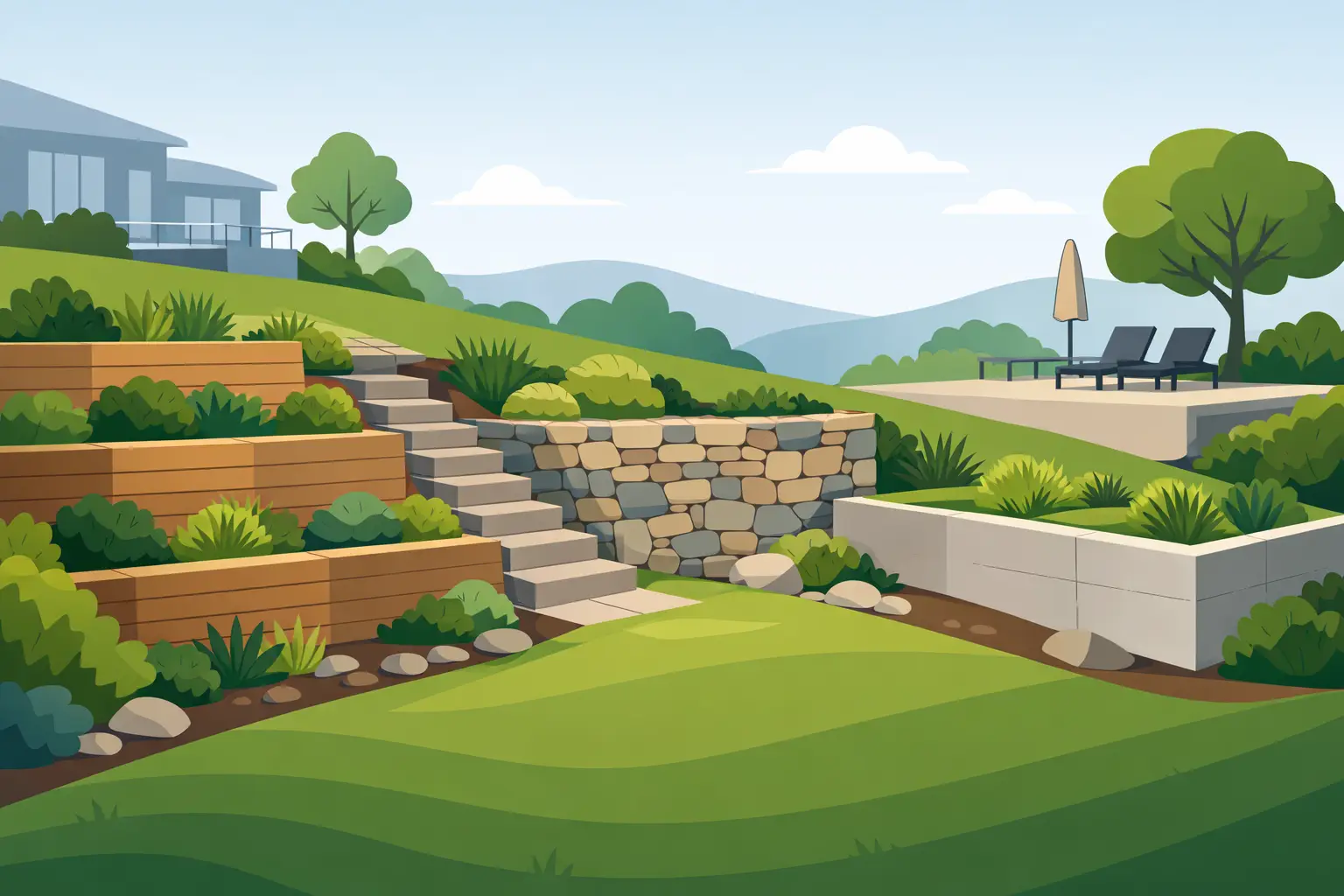
A steep or uneven backyard can make a good-sized block feel frustratingly small. Water runs where it should not, mowing becomes a chore, and there is nowhere level for outdoor dining, kids to play or pets to stretch out. Planning a retaining wall for sloping backyard land can change that completely, creating usable levels while giving the whole property a more finished, considered look.
For Melbourne homeowners, especially on new-build blocks across Mickleham, Truganina, Wollert, Mernda and Donnybrook, a retaining wall is often the step that turns bare, sloping ground into a true outdoor living space. The best result is not simply a wall holding soil in place. It is a well-planned landscape that works with your home, drainage, access and the way your family wants to use the yard.
Start with the purpose, not the wall
Before choosing blocks, sleepers or colours, decide what the newly level space needs to do. A lower terrace might become lawn for children and dogs. A higher level may suit a paved barbecue area, a deck or a quiet sitting zone with garden beds around it. On narrower blocks, a retaining wall can also create a cleaner boundary line and make room for a path, fence or side access.
This decision affects almost every part of the build. A wall designed to support a small raised garden bed is very different from one that needs to hold back a large bank of soil beside a patio or driveway. The height of the slope, the soil conditions, the weight above the wall and where water travels all need to be considered early.
It also helps to think about movement through the yard. Stairs can connect two levels without taking up too much room, while gentle pathways may work better for prams, wheelbarrows and everyday access. The goal is to make the backyard easier to enjoy, not to create a series of attractive spaces that are awkward to reach.
What makes a retaining wall for a sloping backyard work
A retaining wall has one serious job: it must safely hold soil back over time. Appearance matters, but good preparation underneath and behind the wall matters more. A wall can look excellent on installation day and still fail early if its footing, drainage or backfill has been treated as an afterthought.
Drainage protects the entire project
Melbourne weather can swing from long dry periods to heavy rain, and trapped water places enormous pressure behind a retaining wall. That pressure can push a wall forward, cause staining, wash soil out or leave nearby paving uneven.
Proper drainage usually includes a gravel drainage layer behind the wall, agricultural drainage pipe at the base and an outlet where water can escape safely. The finished ground should be shaped so water drains away from the house and does not pool along the wall. If the site has existing drainage issues, solve them as part of the landscape works rather than covering them up with new turf or paving.
Footings and ground preparation are not optional
Every wall needs a stable base suited to its material and height. Ground may need excavation, compaction and a prepared foundation before the first course is laid. This is particularly important on reactive clay soils, which are common in parts of Melbourne and can move as moisture levels change.
For higher walls, walls near structures, or walls supporting a driveway, a professional assessment is essential. Depending on the design, engineering and council requirements may apply. A reliable contractor will help clarify what is needed before construction begins, rather than leaving you with a costly surprise halfway through the job.
One tall wall is not always the best answer
A single tall wall can be striking, but it is not automatically the most practical choice. In many backyards, two lower terraced walls create a safer, softer and more usable outcome. The spaces between them can become garden beds, steps, seating edges or separate lawn and entertaining areas.
Terracing also gives the landscape more depth. Instead of looking at one large wall from the back door, you see layers of planting, paving and open space. The right choice depends on the slope, available area, budget and how you want the backyard to feel when it is complete.
Choosing materials that suit your home
Material selection should balance the style of your property with the amount of retaining required. There is no single best option for every block.
Concrete sleepers are a popular choice for modern Melbourne homes because they are strong, low-maintenance and available in finishes that resemble timber, stone or clean architectural concrete. They suit straight lines, contemporary fencing and neat garden edges. Steel posts provide a tidy framework and are well suited to walls that need dependable structural support.
Natural stone offers a more organic, premium appearance. It can work beautifully in established gardens or homes with a relaxed, textured landscape style, although installation can be more labour-intensive. Masonry block walls provide another durable option and can be rendered or finished to complement the house. Timber sleepers can look warm and informal, but they may need more maintenance and have a shorter lifespan than concrete alternatives.
The wall should not be selected in isolation. Consider the colour of your brickwork, fencing, paving, decking and outdoor furniture. Repeating one or two tones across the backyard helps everything feel intentional, even when the space includes several materials.
Design the levels as a complete outdoor space
The real value of a retaining wall comes from what it allows you to build around it. Once the ground is level, you can make better decisions about turf, paving, planting, fencing, pergolas and lighting.
A practical family layout might include a level lawn closest to the house, a paved entertaining area beside it and raised garden beds along the boundary. A smaller courtyard may benefit from built-in bench seating against the wall, vertical planting and carefully placed lighting to make the area feel more open after dark.
For homes with pets, choose durable turf areas and avoid planting delicate garden beds right along their usual running path. For landlords and commercial properties, low-maintenance finishes and clear access are often the priority. In either case, leave enough space to maintain gardens, clean drains and access boundary fences in the future.
A retaining wall can also improve privacy. Raising a section of the yard slightly, adding a feature screen or coordinating a new fence with the wall can make a previously exposed backyard feel more comfortable without closing it in.
Avoid the shortcuts that cause expensive problems
It can be tempting to treat a retaining wall as a simple weekend project, especially when the slope appears modest. But poorly built walls often show problems gradually: leaning posts, cracked surfaces, water damage, sinking paving or soil spilling through gaps after rain.
Common mistakes include using inadequate drainage, placing a wall too close to a fence without allowing for construction and maintenance, failing to compact the base, and adding heavy loads above the wall without allowing for them in the design. A vehicle, spa, large shed or even a substantial paved area changes the forces the wall must handle.
Another frequent issue is building the wall first and trying to fit the rest of the landscape around it later. Planning the complete yard at the start makes it easier to set correct finished heights for drainage, gates, garden edging, paving and lawn. It also reduces repeated excavation and unnecessary mess.
Get a plan that suits your block
Every sloping backyard has its own conditions, from soil and access to the location of neighbouring fences and downpipes. A site visit makes it possible to assess the fall of the land, discuss how you want to use the space and recommend a practical construction approach.
A2Z Landscaping & Concreting Expert can coordinate retaining walls with turf, paving, decking, fencing, gates and outdoor features, so the finished result feels like one complete project rather than a collection of separate jobs. A clear scope and free no-obligation quote give you a better starting point for making decisions with confidence.
A well-built retaining wall should make your backyard feel calmer and more useful every day. With thoughtful levels, proper drainage and materials that suit your home, the slope that once limited your plans can become the feature that gives your outdoor space its character.
No Responses