

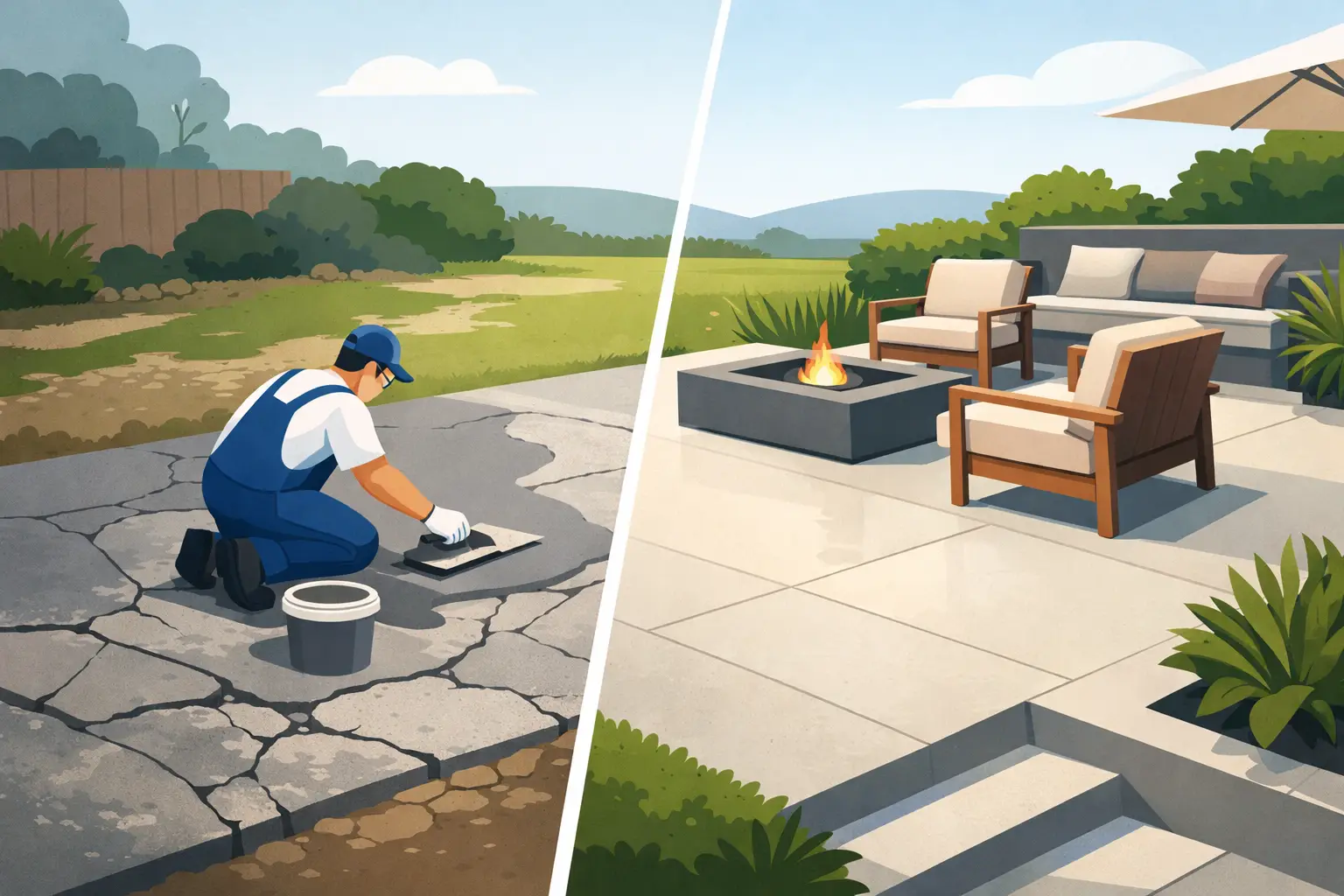
A driveway can be structurally sound yet still make the whole front yard feel worn out. The same goes for a faded patio, stained path or tired poolside area. Concrete resurfacing gives Melbourne property owners a practical way to refresh these surfaces without automatically removing and replacing the entire slab.
For families, landlords and local businesses, the benefit is more than a cleaner-looking surface. A well-planned finish can make an outdoor area safer underfoot, easier to maintain and better connected to the rest of the landscape. It can help turn an overlooked patch of concrete into a space that feels ready for barbecues, outdoor furniture, playtime or welcoming customers.
What Is Concrete Resurfacing?
Concrete resurfacing is the process of preparing an existing concrete slab and applying a new cement-based coating over the top. This coating is designed to bond to the old concrete, creating a refreshed surface with improved colour, texture and appearance.
Depending on the area and the chosen finish, resurfacing can create a clean modern look, a non-slip texture, a decorative pattern or a coloured surface that suits the home and garden. It is commonly considered for driveways, footpaths, patios, alfresco areas, courtyards and commercial walkways.
The key point is that resurfacing improves the top layer. It is not a shortcut for repairing a slab that is failing underneath. If concrete has major movement, serious cracking, drainage problems or extensive crumbling, removal and replacement may be the more reliable option.
When Concrete Resurfacing Is a Good Choice
Resurfacing works best when the existing slab is stable, reasonably level and still has a solid base. Surface wear is normal over time, particularly in busy outdoor spaces exposed to vehicles, rain, sun, soil and garden debris.
It can be a good solution where concrete has faded, has light surface cracks, looks patchy after old repairs, has minor chips, or no longer suits the updated look of the property. A resurfaced patio can work beautifully alongside new turf, decking, paving, fencing or a pergola, helping separate upgrades feel like one finished outdoor living space.
For a driveway, the decision needs a little more care. Vehicle traffic places greater pressure on the surface than a backyard path. A suitable driveway coating and thorough preparation are essential, especially for homes where cars regularly turn, brake or park in the same spots.
Before work begins, the slab should be assessed for signs that it has moved. Large cracks that continue to widen, uneven sections, pooling water and areas that sound hollow can indicate a deeper issue. Addressing the cause first is the best way to protect your investment.
Resurfacing versus replacing concrete
The choice often comes down to the condition of the existing slab and what you want the area to do next. Resurfacing is generally less disruptive than demolition. There is no need to break up a sound slab, remove loads of concrete and rebuild from the ground up. That can make it an appealing option where the goal is a visual upgrade with practical improvements.
Replacement is usually the wiser path if the concrete has sunk, heaved, badly fractured or developed poor drainage. It may also be needed if you are changing levels, extending the area, adding drainage channels or preparing a base for a different outdoor layout.
A straightforward inspection can save frustration later. An honest contractor should explain whether resurfacing is suitable, rather than applying a new finish over problems that will return.
The Preparation Makes the Finish Last
The most impressive resurfaced concrete can fail early if the old slab has not been prepared properly. Preparation is the part homeowners may not notice once the job is complete, but it makes a real difference to the strength and lifespan of the new surface.
First, the concrete needs a thorough clean. Dirt, oil, tyre marks, moss, old coatings and loose material can stop the resurfacing product from bonding as intended. Pressure washing, degreasing and mechanical preparation may be needed depending on the surface condition.
Cracks and small damaged sections are then repaired. Not every crack can simply be filled and forgotten. Some are cosmetic, while others are caused by slab movement. Expansion joints and control joints also need to be considered so the finished surface has room to respond to normal temperature changes.
The surface is then profiled or prepared to receive the coating. This helps the new material grip securely. Once the resurfacing layer is applied, it is worked to the selected texture or pattern and given the correct time to cure before regular use.
Weather matters as well. Melbourne conditions can change quickly, and extreme heat, rain or cold can affect application and curing. Planning work for suitable conditions helps produce a more consistent result.
Choosing a Finish That Suits Your Property
A concrete finish should suit the way the space is used, not just the colour of the house. A smooth decorative surface may look excellent in a sheltered courtyard, while a textured finish is often a better choice around entrances, paths and entertaining areas where wet shoes, kids and pets are part of daily life.
Colour can help tie the concrete into your wider landscaping. Warm neutral tones often work with timber decking, garden beds and brick homes. Grey and charcoal shades can create a sharper contemporary look, particularly with black fencing, feature walls or modern facades. Lighter colours may feel cooler underfoot in sunny areas, although they can show dirt and tyre marks more easily.
Patterned finishes can give the look of paving or stone without adding individual pavers. They can be a practical option for larger areas, but the style should complement the property rather than compete with everything around it. A busy pattern may not suit a small yard already filled with planting, screens and outdoor furniture.
For commercial properties, appearance and safety need to work together. Entry paths, shopfront approaches and shared outdoor areas should be easy to walk on, simple to clean and suited to regular foot traffic.
Plan for Drainage and the Whole Outdoor Area
A refreshed surface will look better, but it should also direct water away from the home and prevent puddles forming where people walk. Resurfacing usually follows the existing fall of the concrete, so significant drainage problems need attention before the new layer is applied.
This is where an A to Z approach can make planning easier. Rather than treating the concrete as an isolated job, consider how it connects with retaining walls, turf, garden edging, paving, gates, fencing and shade structures. A new patio may need a path to the side gate. A driveway upgrade may look far more complete with fresh garden borders and a clean front entrance.
If you are working with a new-build block in Mickleham, Donnybrook, Wollert, Mernda or Truganina, it is often worth mapping out the whole yard before starting individual projects. This helps avoid placing a path, garden bed or pergola where future drainage, access or concrete work will need to go.
Looking After Resurfaced Concrete
Concrete resurfacing is low maintenance, but it is not maintenance-free. Regular sweeping removes grit that can wear on the finish. A gentle wash clears dirt, leaf stains and spills before they settle in, while prompt attention to oil and grease is especially useful on driveways.
Avoid harsh chemicals unless they are recommended for the specific coating. Heavy impacts, dragging sharp metal furniture and neglecting nearby drainage can also shorten the life of the surface. Sealers may need reapplication over time, particularly in high-traffic or exposed areas.
Small issues are easiest to deal with early. If you notice peeling, cracking or water sitting where it should not, arrange an inspection before a minor repair becomes a bigger job.
A2Z Landscaping & Concreting Expert can help assess whether your existing concrete is a good candidate for resurfacing and how it can fit into a more complete outdoor upgrade. The right result is not simply a fresh coating. It is a surface that suits your home, handles everyday life and helps your yard feel like the dreamland you had in mind. Start with a free, no-obligation quote and a clear conversation about what your outdoor area needs.
No Responses