

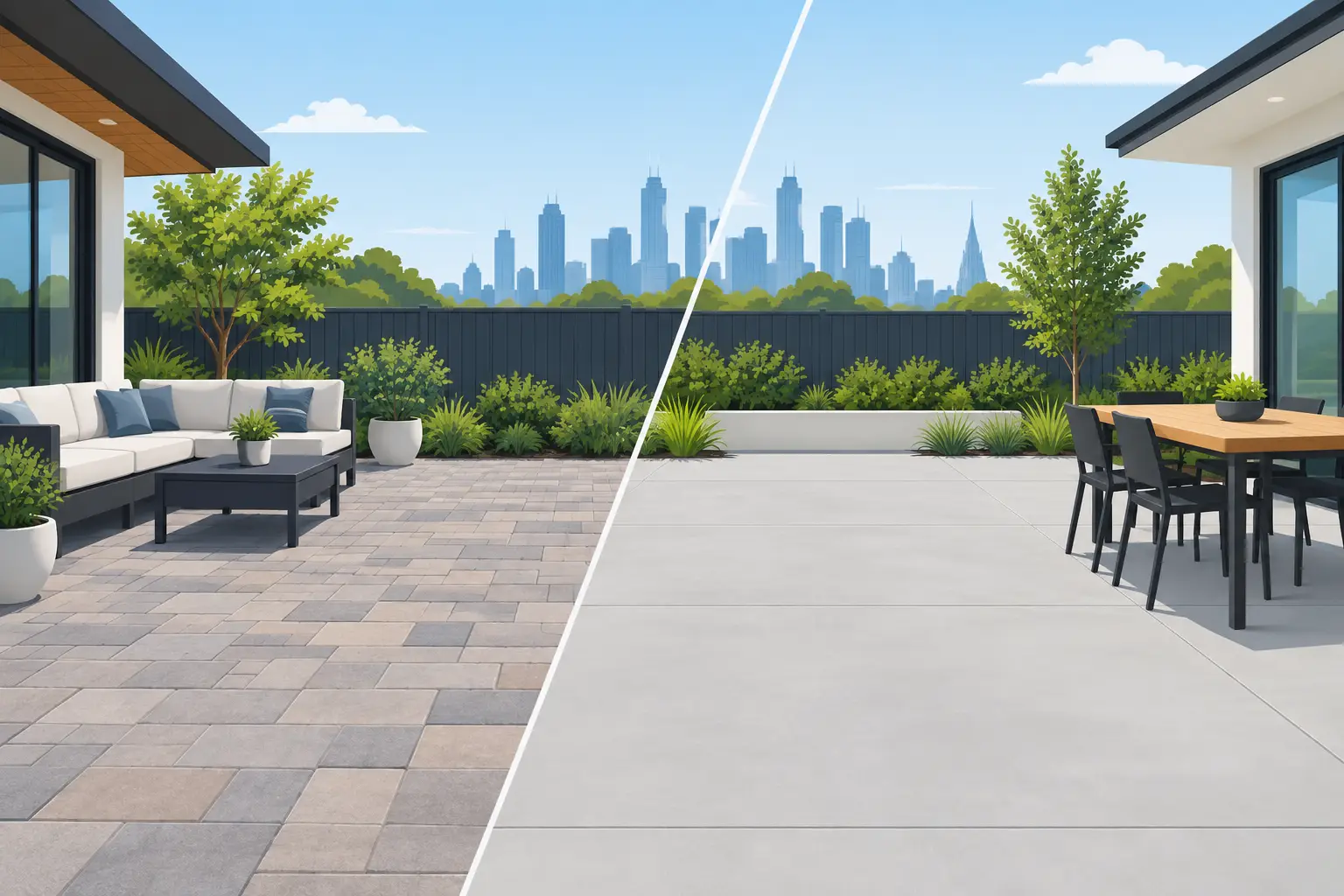
A backyard patio should make life easier. It should be the place where the barbecue goes, where the kids can spread out, where muddy paws can be cleaned up, and where friends can gather without everyone standing on patchy grass. When comparing pavers versus concrete patios, the best choice comes down to how you use your outdoor area, the condition of your block, and the look you want for your home.
For Melbourne homes, especially newer properties around Mickleham, Truganina, Wollert, Mernda and Donnybrook, the right surface can turn a bare or uneven yard into a practical outdoor living space. Both options can look great and perform well when installed properly. The difference is in the details: cost, flexibility, drainage, maintenance, repair and long-term style.
Pavers versus concrete patios: the main difference
A concrete patio is a continuous slab. It creates a clean, solid surface that suits everything from outdoor dining settings to a pergola floor, pathways and side access areas. It can be plain, coloured, exposed aggregate or finished with decorative textures depending on the style of the property.
Pavers are individual units laid over a prepared base. They come in a wide range of sizes, colours and finishes, from crisp modern large-format pavers to traditional brick-style options. Because each paver is separate, the finished area has visible joints that create pattern and character.
Neither material is automatically better. A simple concrete slab can be the most sensible choice for a large entertaining area on a tight budget. Pavers may be worth the extra investment where visual impact, easy repairs or a more detailed design matter most.
When concrete is the practical choice
Concrete is often chosen because it gives homeowners a strong, tidy patio without overcomplicating the project. It is particularly effective for broad open spaces, where a continuous finish can make a compact backyard feel larger and more organised.
For families building a new outdoor area from scratch, concrete provides a reliable base for outdoor furniture, fire pits, barbecue zones and pergolas. It is also easy to sweep, hose down and keep clear of leaves. A well-designed exposed aggregate finish can add texture and colour without the busier look of individual pavers.
Concrete may suit your property best if you want:
- A cost-effective surface for a larger patio area
- A smooth, stable base for heavy furniture or outdoor kitchens
- A modern, uncluttered appearance
- A surface that is straightforward to clean and maintain
The finish matters. Standard grey concrete is practical, but it is not the only option. Exposed aggregate is popular across Melbourne because it offers grip underfoot and a more premium look. Coloured concrete can also work beautifully alongside fencing, rendered feature walls or a timber deck.
The trade-off with concrete
The biggest issue with concrete is cracking. Even a quality slab can develop cracks over time as ground conditions change, temperatures shift and the area settles. Control joints help manage where cracking occurs, but they cannot guarantee a completely crack-free surface forever.
Small cracks may be mostly cosmetic. Wider cracks, movement or sinking can be harder to repair without leaving a visible patch. This is why good site preparation, correct drainage and appropriate slab thickness should never be treated as shortcuts. A patio is only as dependable as the base beneath it.
Concrete also offers less flexibility if you need to access pipes or services below the patio later. Cutting and reinstating a section is possible, but the repaired area may not blend perfectly with the original finish.
Why homeowners choose pavers
Pavers bring more design freedom to an outdoor area. They can soften the look of a large patio, create borders around garden beds, connect a driveway to a backyard, or complement a poolside or entertaining zone. Their individual format makes them especially useful when a project needs curves, transitions or changes in level.
They are also a smart option for blocks where slight movement may occur over time. A properly prepared paver base can accommodate minor settling more easily than one large concrete slab. If a section dips, individual pavers can often be lifted, the base adjusted and the same pavers relaid.
That repairability is a major advantage. If one paver becomes stained, chipped or damaged, it can usually be replaced without redoing the entire patio. Accessing underground services is also simpler because sections can be lifted and reinstated once the work is complete.
The trade-off with pavers
Pavers generally take more time and labour to install, particularly where the pattern is detailed or the area includes curved edges and cuts. The base still needs careful excavation, compaction and levelling. Laying pavers over poor preparation simply creates an uneven patio sooner rather than later.
Joints are another consideration. Depending on the paving style and jointing material, weeds can appear over time, especially where leaves, soil and moisture build up. Regular sweeping and occasional weed treatment will keep the area looking sharp. Some homeowners also prefer the seamless feel of concrete over the jointed finish of pavers.
Cost can be higher than a basic concrete slab, although this depends heavily on the paver selected, the site access, the pattern and the amount of preparation required. Premium pavers and intricate designs naturally increase the overall spend.
Drainage matters more than the surface
Whether you choose pavers or concrete, water needs somewhere to go. This is especially important on new-build blocks, low-lying yards and properties with clay-heavy soil. A patio that looks level can still be designed with a subtle fall so rainwater drains away from the house and does not pool near doors, garden edges or retaining walls.
Concrete patios need the right fall formed during installation. Once the slab has cured, changing drainage is not a small job. Paved areas also need a planned slope, but their joints can provide a little additional drainage depending on the paving system used.
Before selecting materials, look at the whole backyard. Where does water currently collect? Will the patio meet lawn, garden beds, a deck or a pergola? Does the space need drainage channels? These practical questions help prevent a stunning new outdoor area from becoming a puddle after heavy rain.
Style, comfort and everyday use
Your patio should match how your household actually lives. A large exposed aggregate concrete area might be ideal for a busy family that wants a low-fuss entertaining zone. A paver patio may suit a homeowner who wants a more landscaped, layered feel with garden edging, stepping areas and feature walls.
Think about summer heat too. Dark finishes can become hot in direct sun, while lighter colours may show marks more easily. Textured surfaces can improve slip resistance but may require a little more effort when cleaning. If the patio will sit beneath a pergola, near a pool or beside a lawn used by children and pets, these everyday details are worth discussing before work begins.
It is also helpful to consider the home itself. Modern brick homes often suit large-format pavers or exposed aggregate. Period-inspired homes can look excellent with clay-style pavers. For investment properties and commercial sites, a durable, neat concrete surface may offer the best balance of presentation and maintenance.
Choose the option that supports the whole yard
A patio rarely stands alone. It often needs to connect with turf, garden beds, fencing, gates, retaining walls, pathways or a new pergola. Choosing the surface as part of a complete outdoor plan usually delivers a better result than treating it as a separate patch of hard ground.
At A2Z Landscaping & Concreting Expert, the focus is on creating outdoor areas that work from the first step out the back door through to the far end of the yard. That may mean combining paving with fresh turf for a family-friendly layout, or pairing concrete with drainage and retaining work to make an uneven block usable.
The right choice is the one that fits your budget, your site and the life you want to enjoy outside. A careful onsite discussion before construction begins can help turn an empty backyard into a space your family will keep using long after the project is finished.
No Responses