

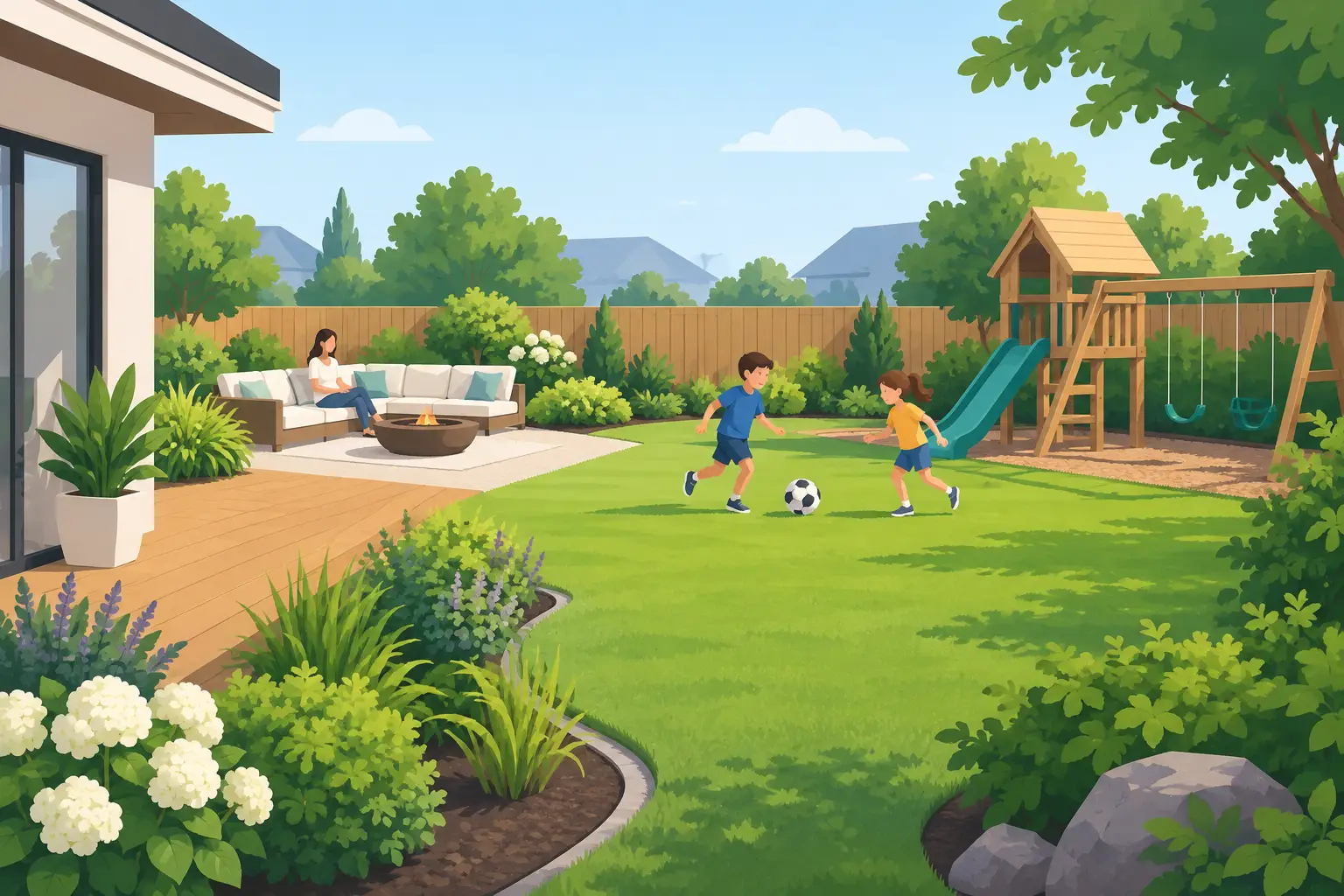
A backyard earns its place in family life when it can handle the everyday stuff: muddy shoes after school, a barbecue with friends, a dog racing laps around the fence, and a quiet coffee before the house wakes up. The best family friendly backyard landscaping ideas are not about filling every corner with features. They are about giving each part of the yard a clear purpose, so it feels safer, easier to maintain and far more enjoyable to use.
For homes across Mickleham, Truganina, Wollert, Mernda and Donnybrook, that often means turning a bare new-build block, a sloping yard or tired paving into an outdoor space that works through Melbourne’s changeable seasons. A practical design can still look stunning. In fact, the gardens that last tend to be the ones planned around real family routines.
Start with zones that suit your family
Trying to make the whole backyard do everything usually creates a space that does nothing particularly well. Instead, divide the area into simple zones for eating, play, relaxation and access. These zones do not need walls between them. A change in surface, planting or furniture placement is often enough to make the layout feel organised.
A paved or decked area close to the house is usually the natural centre for family meals and entertaining. Keeping it near the kitchen makes carrying food, drinks and supplies much easier. It also lets adults keep an eye on children playing outside without being separated from the action.
Leave a clear, open lawn area where kids can kick a ball, set up a sprinkler or spread out toys. The size depends on your block, but even a compact patch of quality turf can make a major difference to how a backyard feels. Avoid breaking the lawn into awkward strips that are difficult to mow and too small to use.
Make the route through the yard easy
A solid path between the back door, clothesline, shed, side gate and entertaining area saves a lot of frustration. It reduces muddy tracks through the house and protects turf in the spots people naturally walk every day. Paving, concrete and stepping paths can all work well, depending on the look you want and how much traffic the area receives.
For a side access path, choose a durable surface with good drainage and enough width for bins, bikes or a wheelbarrow. This is one of those practical details that makes a finished backyard feel genuinely functional rather than simply decorated.
Put safety first without making the yard feel clinical
Family-friendly design should anticipate tumbles, wet feet and energetic play. Smooth, level surfaces matter, especially around patios, paths and play zones. Uneven concrete, loose pavers and sudden changes in height can become trip hazards, so repair or rebuild these areas before adding furniture or landscaping around them.
Drainage deserves the same attention. After a heavy Melbourne downpour, water should move away from the home and not pool beside the patio, on lawn or near a play area. A yard that stays soggy is harder for children and pets to use, can damage turf, and may cause ongoing maintenance problems.
If your property has a slope, a retaining wall can turn an impractical area into safe, usable levels. One level may become a lawn for play, while another becomes a paved entertaining space. Retaining walls need to be built properly for the soil conditions and height involved, but they can be one of the smartest investments for uneven blocks.
Choose non-slip finishes for frequently wet areas and avoid sharp-edged garden borders beside active play spaces. Where younger children are involved, place climbing equipment away from hard paving, fences and garden beds. Soft turf is often a better landing surface, although it will need regular care in high-use spots.
Choose low-maintenance planting that can take real life
A beautiful garden should not require hours of work every weekend. For busy households, the goal is a garden that looks cared for without becoming another demanding job on the to-do list.
Use hardy plants suited to Melbourne conditions, and group them according to their water needs. Dense planting along fences can soften a boundary and improve privacy, while leaving the middle of the yard open for family use. Raised garden beds can be a good option for herbs, vegetables or colourful flowers because they create a tidy edge and keep the growing area contained.
Mulch helps garden beds hold moisture, reduces weeds and gives the landscape a finished appearance. It is a simple addition with a big payoff, particularly around young plants. If pets use the yard, select plants carefully and avoid species that could be harmful if chewed. A local landscaping professional can help match plant choices to your soil, sunlight and household needs.
Artificial turf can suit some households, particularly small courtyards or shaded areas where natural grass struggles. It is neat and low on day-to-day upkeep, but it can become hot in full summer sun and does not offer the cooling, natural feel of real lawn. For many family yards, natural turf in the main play zone and paving in high-traffic areas creates a better balance.
Build shade and privacy into the plan
A backyard is far more likely to be used when there is somewhere comfortable to sit on a hot afternoon or during light rain. A pergola over a dining area creates a defined outdoor room and gives you a reliable place for family meals, weekend barbecues and relaxed entertaining. Add lighting and the space can remain useful long after sunset.
The right shade solution depends on the orientation of your home. A west-facing patio may need more protection from late-afternoon heat, while a north-facing area can benefit from adjustable cover that lets in winter sun. This is why a quick sketch and a conversation about how the sun moves across the yard can prevent expensive changes later.
Privacy is just as valuable, especially on closely built new estates. Well-built fencing, gates and carefully placed feature walls can make a yard feel more secure and settled. Screening plants are softer and attractive, but they take time to grow. Solid fencing delivers immediate privacy, while planting in front of it adds colour and warmth over time.
Family friendly backyard landscaping ideas for pets too
Pets are part of the household, so they should be considered before construction begins. Give dogs a route around the yard if they tend to patrol the boundary, rather than placing delicate plants in their favourite running line. A tough strip of turf or a well-drained path can prevent worn, muddy tracks along the fence.
Make sure gates latch properly and fencing is secure at ground level. If a dog digs, it may be worth reinforcing the base of selected fence sections or setting aside a small digging area rather than constantly repairing garden beds. Keep a shaded spot and a water bowl within easy reach during warmer weather.
For families with both children and pets, durable materials are usually the better choice. A high-quality paved surface, sturdy edging and established turf may cost more initially than a quick fix, but they are more likely to stand up to daily use.
Invest where it changes how you live
Not every backyard needs a complete overhaul at once. If the budget is tight, begin with the elements that will make the greatest difference: fixing drainage, levelling unsafe ground, creating a usable patio, installing turf or improving privacy. These foundations make future additions easier and help avoid paying twice for work that should have been coordinated from the start.
For example, it makes sense to plan decking, pergola footings, paving levels, garden edging and drainage together. Installing one feature at a time without an overall plan can lead to mismatched heights, poor water flow or the need to lift and redo finished work later.
A2Z Landscaping & Concreting Expert can help local property owners bring these elements together, from retaining walls and turf through to fencing, paving, decking and pergolas. A single coordinated team means the backyard can be planned as one connected outdoor living space rather than a collection of separate jobs.
Let the backyard grow with your household
The ideal yard for a toddler will not be exactly the same as the ideal yard for teenagers, but flexible choices will serve your family for years. Leave room for movable furniture, choose an entertaining area that can fit extra chairs, and avoid permanent features that block the only useful open space.
A thoughtfully planned backyard does more than improve street appeal or add value to the property. It gives your family a place to spend ordinary time well: dinner outside, a game on the lawn, a chat under the pergola or a peaceful moment at the end of the day. Start with how you want to live outdoors, then build each part of the landscape around that picture.
No Responses