

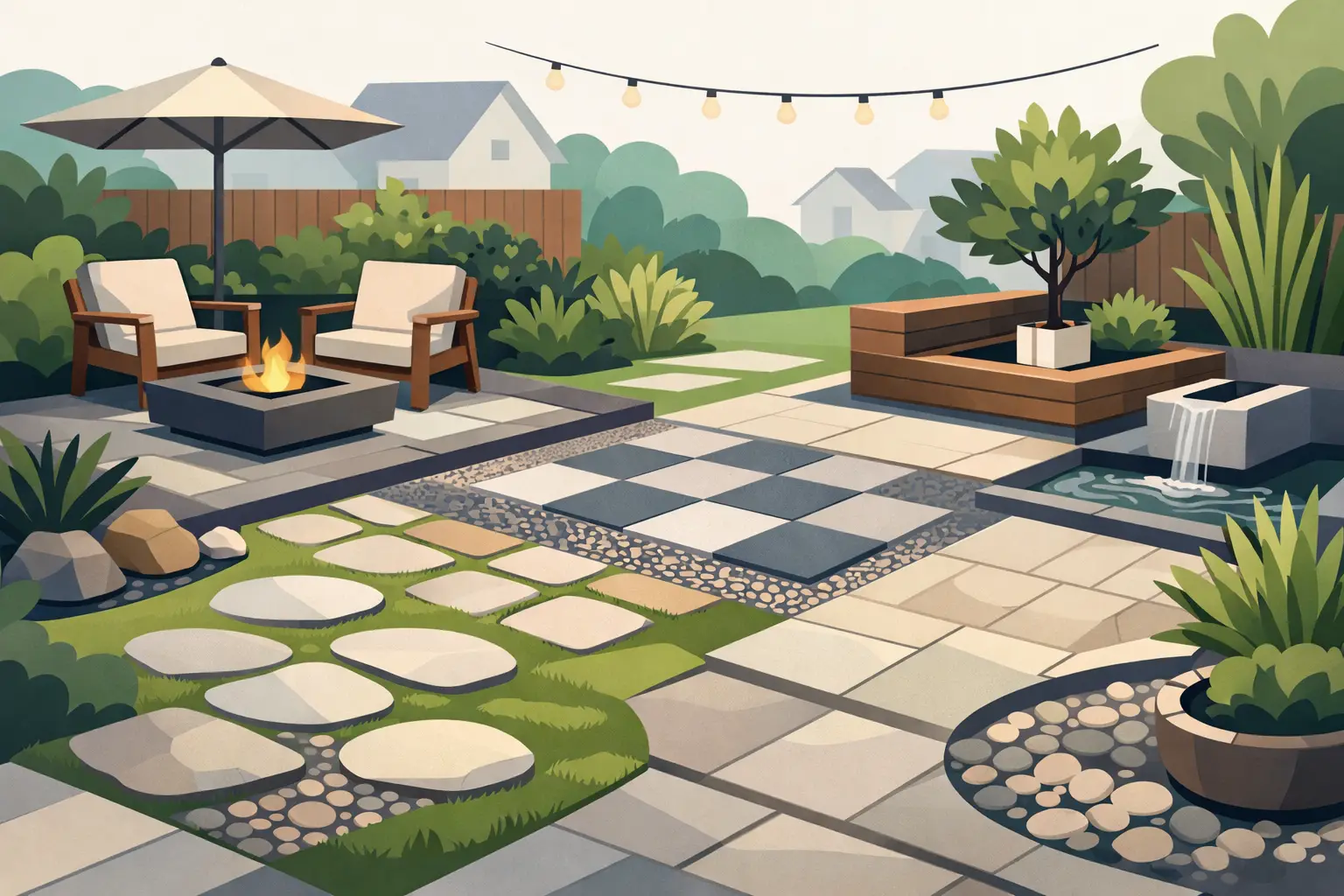
A small backyard should not feel like the leftover strip behind the house. With the right layout, paving can turn an awkward patch of dirt, grass or old concrete into a welcoming place for a barbecue, a morning coffee, children’s play or a quiet evening outside. The best outdoor paving ideas for small backyard projects are not about squeezing in more hard surfaces. They are about making every square metre useful, comfortable and easy to maintain.
For homes across Mickleham, Truganina, Wollert, Mernda and Donnybrook, that often starts with a realistic look at how the space will be used. A courtyard for two people needs a different paving plan from a family backyard with pets, a new-build block with muddy access, or a compact entertaining area beside a pergola.
Start with one clear purpose
Small spaces work best when the paved area has a main job. Trying to fit an outdoor kitchen, oversized dining setting, fire pit, play zone and garden into a narrow yard can make it feel crowded before the work even begins. Choose the activity that matters most, then build the rest of the design around it.
If weekend entertaining is the priority, create a paved dining zone directly outside the rear door. This keeps food, drinks and guests moving easily between the kitchen and backyard. If relaxation is the goal, a smaller paved sitting area with built-in bench seating may give you more comfort than a large open expanse.
Families may prefer paving that forms a clean path around a lawn area, leaving enough soft turf for kids and pets. Landlords may value a neat, durable finish that lifts presentation and reduces ongoing garden upkeep. There is no single right answer, but there should be a clear reason for every part of the paved space.
Outdoor paving ideas for small backyard layouts
A paving design does not need to be complicated to look considered. In fact, simple shapes often make compact yards feel larger and calmer. A rectangular patio that follows the house line is efficient, easy to furnish and generally more cost-effective than a paving area with many curves and cuts.
Run paving from the house to create flow
Extending paving directly from the back door makes a small backyard feel like part of the home, rather than a separate outdoor area. This is especially effective for townhouses and newer properties where the yard is narrow. A level, well-finished surface also helps reduce the muddy trail through the house during Melbourne’s wetter months.
The key is proportion. A patio that takes up the entire backyard can feel harsh and hold more heat in summer. Leaving space for planting along a fence, a small lawn panel or raised garden beds softens the edges and gives the area more depth.
Use a diagonal pattern with care
Laying pavers diagonally can draw the eye across a narrow space and make it appear wider. It can be a smart visual trick for a small square courtyard, particularly with simple, neutral-coloured pavers. The trade-off is that diagonal layouts usually involve more cutting and waste, which can increase labour and material costs.
For many homes, a straight lay pattern with clean borders achieves a similarly polished result with a more practical budget. A site visit can help determine where a feature pattern is worth the extra detail and where simplicity will serve the space better.
Break up hard surfaces with green pockets
A small paved backyard does not have to be all grey or beige. Narrow planting beds along fences can introduce greenery without taking over the usable area. Climbers on screens, low-maintenance shrubs and feature plants can add privacy, colour and softness around the patio.
Another option is to combine stepping pavers with gravel, groundcovers or lawn. This works well for a side path, a route to the clothesline, or an informal corner where a full paved slab would feel too heavy. Be mindful that loose gravel can be less suitable for young children, some pets and outdoor furniture with narrow legs.
Choose materials that suit Melbourne conditions
The finish of the paving changes the whole character of a backyard. Concrete pavers provide a clean, versatile look and are available in colours and sizes that suit contemporary homes. They are a practical option for patios, paths and service areas when installed on a properly prepared base.
Natural stone can bring warmth and a more premium feel, but it usually comes with a higher material and installation cost. Some stone surfaces need more attention to sealing and cleaning, particularly around barbecues, pools or shaded spots where dirt and moisture can build up.
Porcelain pavers can offer a crisp modern style and are popular for low-porosity, easy-clean outdoor areas. However, the product and preparation requirements need to match the site. It is not simply a matter of choosing what looks best in a showroom. Drainage, slope, foot traffic, access and the condition of the existing ground all affect the right choice.
For smaller spaces, lighter tones can reflect more light and help the backyard feel open. Very pale paving, though, can show marks from food, leaves and muddy shoes more easily. Dark pavers can look sharp but may become hot underfoot in direct summer sun. A mid-tone finish is often a sensible balance for busy family homes.
Build in shade, privacy and a place to sit
Paving gives structure to an outdoor area, but the surrounding features make it enjoyable for longer. A paved patio beside a pergola creates an outdoor room that can be used more often through changing weather. Even a compact pergola or shade structure can make a major difference to a west-facing backyard that receives strong afternoon sun.
Privacy is just as valuable in closely built neighbourhoods. Fencing, screening, feature walls and carefully selected planting can make a small paved space feel more protected without blocking light or airflow. Where a retaining wall is required to level an uneven yard, it can also become a useful edge for garden beds or integrated seating.
Built-in benches are particularly helpful when floor area is limited. Unlike multiple loose chairs, they can sit neatly against a fence or wall and leave the centre of the patio clear. Add outdoor cushions when entertaining, then store them away when the weather turns.
Do not overlook drainage and preparation
Good paving is not only about the finished surface. The work underneath is what helps it stay level and look good over time. On many new blocks and older yards alike, soil movement, poor drainage or rushed preparation can lead to sinking pavers, puddles and uneven edges.
The finished paving should fall away from the house so water is directed where it needs to go. This does not mean creating an obvious slope that makes furniture wobble. It means planning the levels properly from the start. Drainage points, existing stormwater, doors, garden beds and neighbouring boundaries all need consideration before the first paver is laid.
This is also why paving over an uneven old surface without checking the base can be a false saving. Sometimes existing concrete can be retained or refreshed; other times, removal and proper preparation is the better long-term outcome. The right approach depends on its condition, levels and the finished height available near doorways.
Make access practical, not an afterthought
A beautiful patio loses value if the path to the bin, side gate, clothesline or shed remains muddy and difficult. In a compact backyard, a narrow paved path can connect these everyday areas while giving the whole landscape a more organised appearance.
Consider how people actually move through the yard. Leave enough room to carry a mower, wheelie bin or gardening supplies without stepping through garden beds. If there is a gate to the front of the property, a durable path also makes it easier for trades, visitors and family members to use the space in wet weather.
For a cohesive result, use the same paver in the patio and path, or pair two finishes with a shared colour tone. Too many competing materials can make a small area feel busy. A border course, matching retaining wall caps or coordinated garden edging can provide detail without visual clutter.
Plan the whole backyard before paving begins
Paving is usually one part of a bigger outdoor transformation. Before finalising the layout, think about future turf, decking, fencing, garden beds, lighting, pergolas and drainage. Installing paving first without a broader plan can lead to awkward joins or unnecessary rework later.
A2Z Landscaping & Concreting Expert helps Melbourne property owners bring these elements together, from an underused new-build yard through to a complete outdoor living upgrade. A free, no-obligation quote is a good opportunity to discuss the site, your budget and the practical features that will make the biggest difference to daily life.
The most successful small backyard is not the one with the most paving. It is the one where you can step outside, put a chair down, enjoy the space and feel that every part of it has been designed for the way you live.
No Responses