

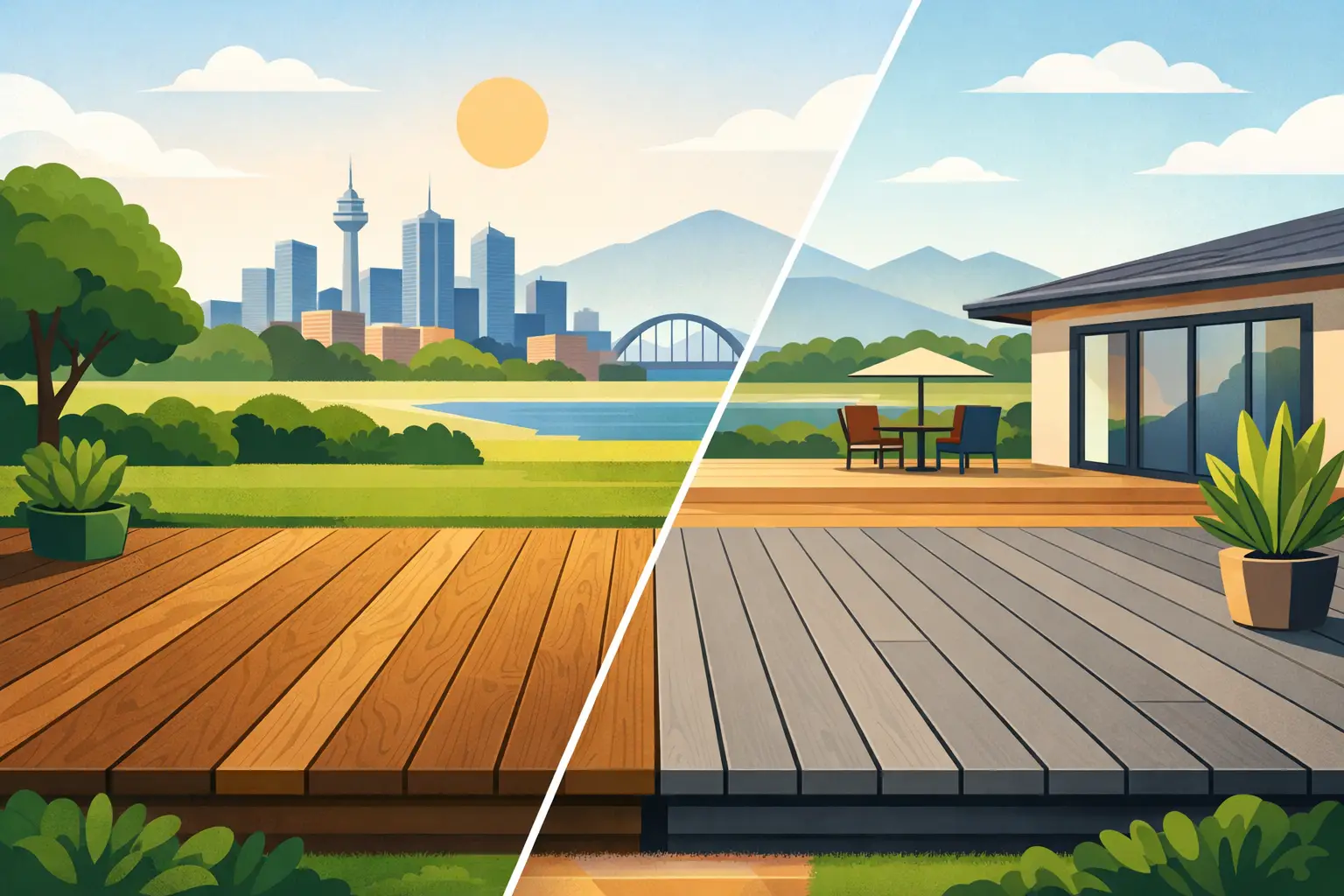
A deck can turn an unused patch of lawn, uneven ground or tired paving into the part of the home where everyone gathers. But before choosing colours, furniture or a pergola, there is one decision that shapes the whole project: timber versus composite decking. Both can create a stunning outdoor living space, yet they suit different budgets, routines and Melbourne backyards.
For families in Mickleham, Truganina, Wollert, Mernda, Donnybrook and across Melbourne, the best choice is rarely about which material is universally better. It is about how you want to use the area, how much maintenance you are happy to take on and how the deck will connect with the rest of your landscape.
Timber versus composite decking: the real difference
Timber decking is made from natural wood, with popular Australian options including treated pine, merbau, spotted gum and blackbutt. Each board has its own grain, colour variation and character. A timber deck feels warm, organic and at home beside lawns, garden beds, feature walls and established trees.
Composite decking is manufactured from a blend of recycled wood fibres and plastic materials. It is designed to give the look of timber without requiring regular oiling or staining. Boards are available in consistent colours and finishes, often with concealed fixing systems that create a clean, modern surface.
At a glance, timber usually has a lower upfront material cost and a more natural appearance. Composite generally costs more to install but needs much less ongoing care. That simple comparison is useful, but it does not cover everything that matters once the deck is exposed to Melbourne sun, winter rain, muddy shoes, pets and weekend entertaining.
Start with the way your household lives outdoors
A deck should earn its place in your yard. If you picture kids coming in from the lawn, a dog racing around after rain and regular barbecues with friends, choose a surface that matches that level of use.
Composite can be an appealing option for busy households, landlords and commercial properties that want a neat finish without scheduling annual deck maintenance. Most dirt and spills can be cleaned with a broom, water and a suitable mild cleaner. It also resists splinters, which is a genuine advantage for bare feet around pools, outdoor dining areas and play spaces.
Timber can be just as practical, but it asks for more care. It may need cleaning and re-oiling or staining periodically to protect the boards and maintain their colour. For some homeowners, that is not a drawback. Looking after a natural timber deck can be a satisfying part of caring for the home, and it provides an opportunity to refresh the colour when the garden or exterior style changes.
Consider how often the deck will be used, who will use it and whether maintenance is something you will realistically keep up with. A beautiful timber deck that is never maintained can weather unevenly. A composite deck may reduce the maintenance load, but it still needs regular cleaning to prevent grime, leaf matter and mildew from building up.
Appearance: natural variation or a consistent finish?
Timber has a character that manufactured boards cannot fully copy. The knots, grain and subtle changes between boards give it depth. It works particularly well when the aim is a relaxed, natural garden setting with timber fencing, retaining walls, turf and layered planting.
The colour of timber does change over time. Sun and rain can turn unprotected boards grey, while regular oiling helps retain a richer tone. Some people love the soft silvered look of weathered hardwood. Others prefer the original warmth of merbau or the lighter look of spotted gum. The key is to decide which finish you want before installation and plan the upkeep needed to achieve it.
Composite offers consistency. If you want a crisp, contemporary courtyard or a deck that coordinates closely with your home’s façade, paving or fencing, its reliable colour can be a major benefit. Many composite ranges now have textured, timber-look finishes rather than a flat plastic appearance. Still, inspect full-sized samples outdoors where possible. Colour can look very different in direct sunlight than it does under showroom lighting.
For new-build properties with a blank backyard, this choice can set the direction for the entire landscape. A dark deck may create contrast against light render and pale paving, while lighter boards can make a compact courtyard feel more open.
Cost is more than the first quote
Timber is often less expensive at the start, especially treated pine. Hardwood options may cost more, while composite boards generally sit at the higher end of the initial investment. Installation costs also depend on the site: access, ground levels, footings, stairs, framing, drainage and the shape of the deck all affect the final price.
It is worth looking beyond the first number. Timber requires decking oil, cleaning products and time or professional maintenance over its life. Composite usually avoids these recurring treatment costs, which can narrow the gap over the long term.
That does not automatically make composite better value. A well-built and well-maintained timber deck can provide many years of enjoyment and adds a timeless finish to a property. A small entertaining platform may be the perfect place to invest in quality timber, while a large deck around a new family home may make the lower-maintenance appeal of composite more compelling.
Ask for a clear scope that includes the subframe, footings, fixings, edging, steps and any demolition or site preparation. A deck is only as reliable as the structure below the boards. Good drainage and a properly built frame matter whether the visible surface is timber or composite.
Heat, rain and Melbourne weather
Melbourne weather can test any outdoor surface. Summer days can be hot, winter brings wet conditions, and shaded areas may stay damp for longer than expected.
Composite boards can become quite hot in full sun, particularly in darker colours. This matters on west-facing decks, around pools and in areas where children or pets will walk barefoot. Lighter colours can help, as can shade from a pergola, roof structure or carefully positioned planting. Before selecting a colour, think about the hottest part of the day rather than only how it looks in the morning.
Timber can also heat up, but many people find it more comfortable underfoot in direct sun. It needs protection from moisture, however. Without appropriate care, timber may crack, cup or become more prone to surface deterioration. Quality materials, correct board spacing and suitable coatings help manage these risks.
Both materials can become slippery when covered with algae, leaf litter or water. Good site design makes a difference. Ensure the deck has proper drainage, avoid trapping moisture against walls or garden beds, and keep surrounding trees and plants maintained. Pressure washing should be used carefully, especially on timber, as excessive pressure can damage the surface.
Installation details that should not be overlooked
The best decking material can disappoint if the project is poorly planned. Before building starts, consider the height of the finished deck, how it meets doors and paving, where water will flow, and whether there are services beneath the ground.
A raised deck may need stairs, balustrades or screening for privacy. On a sloping block, the design may need retaining walls or thoughtful ground preparation first. If the goal is to create a complete entertaining area, it can be more cost-effective and visually cohesive to plan the deck alongside a pergola, fence, gate, turf, paving and garden beds.
Composite often expands and contracts more than timber as temperatures change, so it requires the correct fixing method and spacing. Timber also needs suitable gaps between boards for drainage and movement. These details are not the exciting part of choosing a deck, but they prevent issues later and help the finished area stay safe and tidy.
Which decking is right for your property?
Choose timber if you value authentic natural texture, want a flexible range of species and stains, and are comfortable with periodic maintenance. It is a strong choice for homeowners who want their deck to blend naturally with gardens and appreciate the changing character of real wood.
Choose composite if low-maintenance living, consistent colour and splinter resistance are high priorities. It can suit busy families, rental properties and large entertaining spaces where the goal is to spend more weekends using the deck than maintaining it.
There is also room for a mixed approach. A timber deck may work beautifully beside a natural lawn and garden, while composite can be practical around a pool or high-traffic alfresco zone. The surrounding materials, sunlight, budget and intended use should guide the decision.
A2Z Landscaping & Concreting Expert can help turn the choice into a complete outdoor plan, considering the deck alongside levels, drainage, turf, retaining walls, fences and shade. A free, no-obligation quote gives you the chance to discuss your yard properly before committing to a material.
The right deck is the one that makes it easier to step outside, put the kettle on or fire up the barbecue, and enjoy the property you have worked hard for.
No Responses