

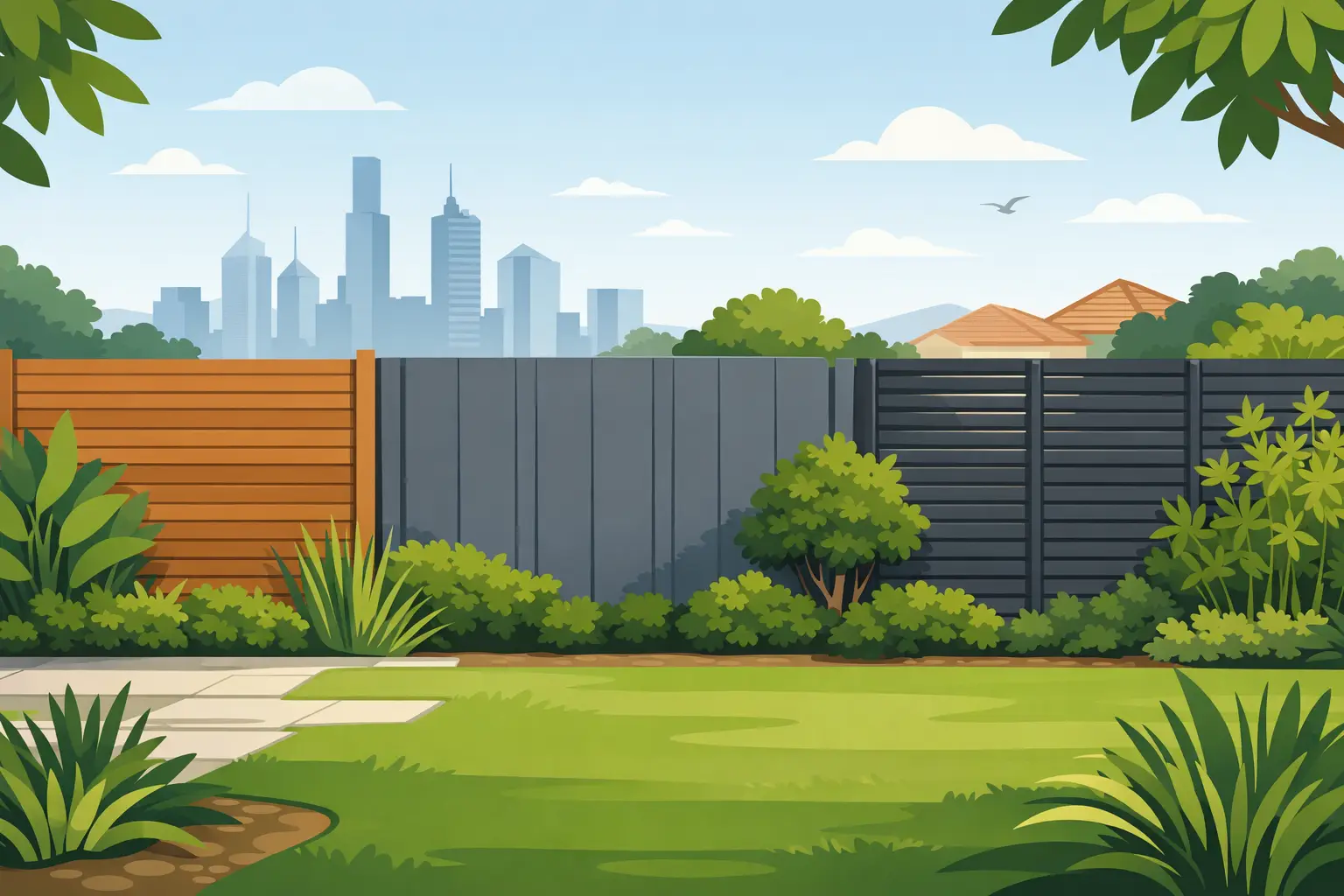
A private backyard changes how you use it. The barbecue feels more relaxed, the kids can play without feeling overlooked, and a quiet morning coffee becomes exactly that. Choosing the best fences for privacy is about more than blocking a neighbour’s view. It is about creating a comfortable boundary that suits your home, handles Melbourne weather and works with the rest of your outdoor space.
For homes in Mickleham, Truganina, Wollert, Mernda and Donnybrook, the right answer often depends on the block itself. New estates can have exposed yards and close-set homes, while established properties may need a replacement fence that ties into mature gardens, paving or a pergola. Here is what to consider before choosing a material.
What Makes a Fence Truly Private?
Height matters, but it is only one part of a successful privacy fence. A fence with open gaps, uneven levels or a poor fit along a sloping boundary will still leave sightlines into the yard. The best design provides solid coverage where you need it, especially around outdoor dining areas, decks, pools and living-room windows.
Most residential boundary fences are commonly around 1.8 metres high, but local council rules, estate guidelines and shared-boundary requirements can affect what is allowed. Extra height may be possible in some situations, though it is worth checking before work starts. A good fencing plan also considers gates, retaining walls, drainage and access, rather than treating the fence as a stand-alone job.
Wind is another major consideration across Melbourne’s newer growth areas. A tall solid fence catches more wind than an open one, so it needs appropriate posts, footings and installation. Saving money on the structure can lead to leaning panels, loose posts and costly repairs after a rough season.
Best Fences for Privacy: Your Main Options
Timber paling fencing
Timber paling fencing remains a popular choice for Melbourne homes because it is familiar, versatile and suits almost any backyard. It creates a solid screen, works well along long side boundaries and can be built to follow modest changes in ground level. Timber also has a warmer, more natural look than metal, particularly beside lawn, garden beds and timber decking.
For extra privacy, consider capped paling fencing or a stepped design that follows the slope correctly. Capping gives the top edge a neater finish and can help cover small gaps between palings. A timber fence can also be painted or stained to complement the home, although regular maintenance is part of the deal.
The trade-off is lifespan. Timber is exposed to sun, rain and ground moisture, so it can eventually warp, crack or rot if it is not properly installed and maintained. Treated timber and quality posts make a real difference. It is a practical option when you want a traditional backyard feel and a fence that can be easily repaired in sections.
Colourbond steel fencing
Colourbond fencing is an excellent choice for homeowners who want clean lines, dependable privacy and minimal ongoing maintenance. The solid steel panels offer complete visual screening, do not need painting and come in colours that can suit contemporary homes, rendered feature walls and modern landscaping.
This style is especially useful on new-build blocks where the house, landscaping and fence are all being brought together at once. Its slim profile can also preserve a little more usable space along a narrow side yard compared with a thicker timber structure.
A Colourbond fence needs professional installation to look its best. Posts must be straight, panels need to sit securely, and the fence should be designed to cope with wind exposure. Colour matching is worth thinking about too. A darker fence can make greenery stand out, while lighter shades may feel less imposing in a compact yard. If dents or damage occur, repairs can be less straightforward than replacing a few timber palings.
Modular walls and masonry fencing
For premium privacy, noise reduction and a more architectural finish, a modular wall or masonry-style fence can be hard to beat. These fences create a solid boundary with a substantial look, making them well suited to front-facing areas, outdoor entertaining zones and homes near busy roads.
A rendered or textured finish can connect beautifully with a modern façade, concrete paving or a feature wall. It can also create a sheltered backdrop for built-in seating, planter boxes and outdoor kitchens. Where a standard fence feels temporary, a well-designed wall can make the whole property feel more established.
This option usually requires a higher upfront budget and more careful planning than timber or steel. Foundations, drainage, site access and finished height all need to be considered. It is often best chosen as part of a broader landscape project, particularly if retaining walls, paving or a new driveway are also planned.
Composite and slatted privacy screens
Composite screening and horizontal slatted fences offer a modern alternative for spaces where style is as important as privacy. Composite materials can provide the timber-look appearance without the same level of repainting and weathering, while aluminium slats create a crisp, contemporary finish.
Slatted fencing is not always fully private. The spacing between slats can allow light and airflow through, which is ideal for a courtyard that feels enclosed but not boxed in. However, if neighbours can see directly through the gaps, it may not meet your privacy needs. Tighter spacing, angled slats or a solid-panel section can provide better screening.
These products are particularly effective around patios, pool equipment, bins, side paths and small entertaining areas. They can also be combined with a standard boundary fence, giving you a feature finish where people gather without paying for it across the entire block.
Choose the Fence to Suit How You Live
The best material is not always the best fence for your property. A family with an active dog may need a secure fence with no gaps at ground level and a gate that latches reliably. A landlord may prioritise a durable, low-maintenance option that presents well for years. A homeowner building a dreamland for weekend entertaining may prefer a feature wall near the deck, with simpler fencing down the sides.
Privacy can also be created in layers. For example, a 1.8-metre boundary fence may do the main job, while a screen near the outdoor table blocks an overlooking window. A pergola with a privacy screen can make a deck feel more sheltered without changing the whole boundary. Dense planting can soften the view of a fence, but plants alone take time to grow and need enough room, water and ongoing care.
If your yard is uneven, do not ignore the levels. A fence at the wrong height relative to a raised deck or neighbouring property may leave you exposed even when it meets the usual height. Retaining walls and fencing often need to be planned together, so the finished area is safe, tidy and genuinely private.
Fence Details That Make a Big Difference
A privacy fence should look good from both sides where possible, particularly when it is shared with a neighbour. Discuss the boundary position early, confirm who is responsible for what, and keep communication straightforward. It helps avoid disputes and ensures the finished fence serves both properties properly.
Gates deserve the same attention as the fence. A poorly placed side gate can create an awkward view into the backyard or leave a weak point in security. Match the gate height and style to the fence, and allow enough clearance for bins, garden equipment and everyday access.
Also consider the fence colour in relation to the garden. Monument-style dark tones can create a sharp modern frame, but they absorb heat and can make a small space feel enclosed if there is little planting. Natural timber works beautifully with greenery, while neutral steel tones can sit quietly behind plants and paving.
Quality installation is what makes each material perform. Straight lines, solid footings, correctly spaced posts and neat finishing are not small details. They are what keep a fence standing firm, looking polished and protecting your privacy over time.
Planning a Privacy Fence With Confidence
Before committing to a fence, stand in the parts of the yard you use most and look outward. Notice where the overlooking occurs, where prevailing wind hits, how water moves after rain and whether future landscaping could change the levels. Take the time to think about the whole outdoor area, not only the boundary line.
A2Z Landscaping & Concreting Expert can help property owners bring fencing, gates, retaining walls, turf, paving and outdoor living features into one coordinated plan. Whether you need a straightforward timber boundary fence or a more complete backyard transformation, a clear on-site discussion and free no-obligation quote can help turn an exposed yard into a space you will want to spend time in.
No Responses