

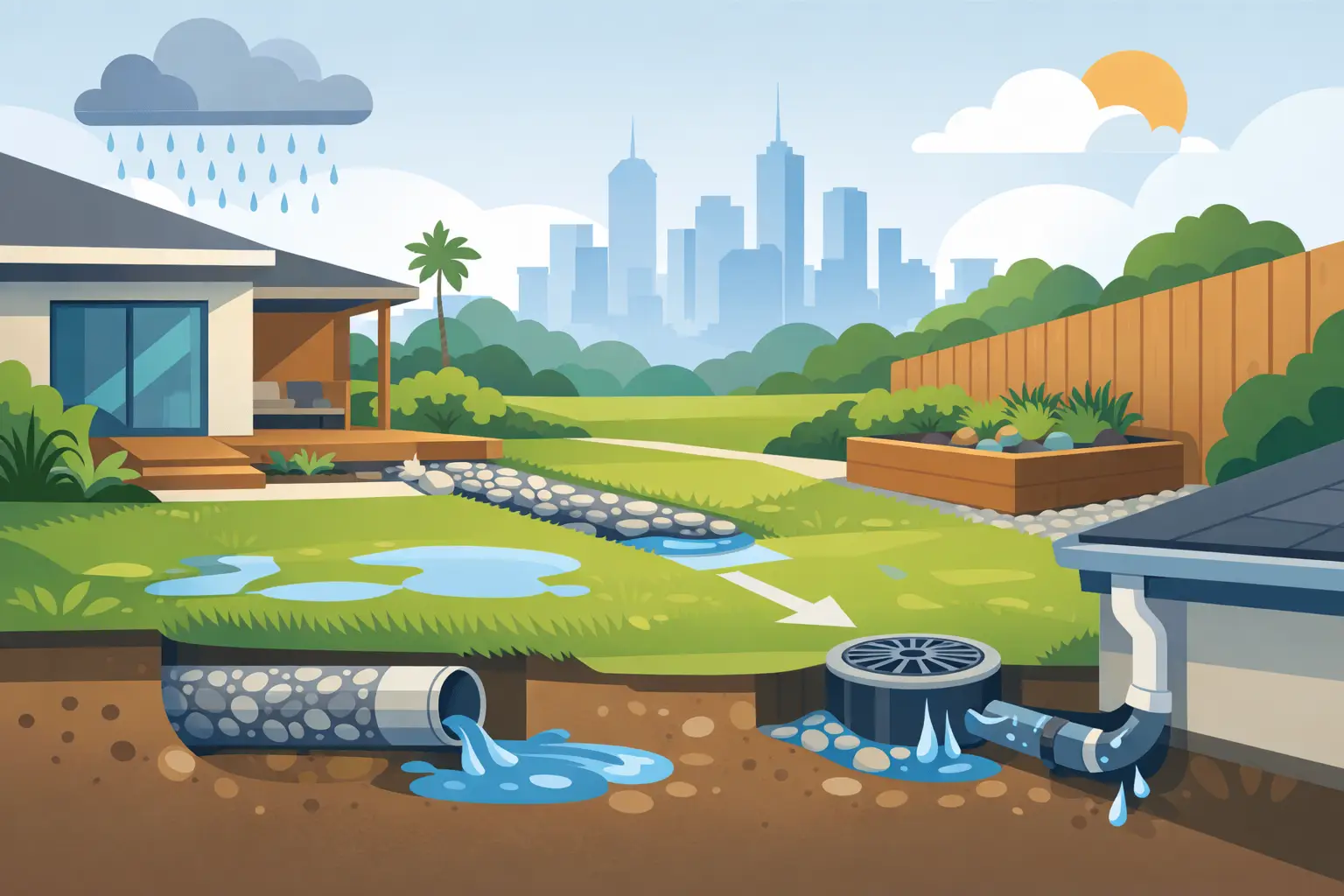
A backyard that stays soggy after rain is more than an inconvenience. It can turn lawn into mud, leave puddles beside the patio, make paths slippery and put expensive paving, decking or retaining work at risk. This backyard drainage planning guide helps Melbourne property owners work out where water is coming from, where it should go and how to make outdoor areas useful in all seasons.
For new-build blocks in Mickleham, Donnybrook, Wollert, Mernda and Truganina, drainage should be considered before turf, paving and garden beds go in. For established homes, the clues are often already there: pooling water, damp patches near the house, washed-out garden soil or water tracking across concrete. A good plan deals with the cause, not just the puddle you can see.
Start Your Backyard Drainage Planning Guide With Water Flow
The first job is to watch the yard during rain, or shortly afterwards. Notice where water enters the property, where it collects and how long it takes to disappear. Water may run from a neighbour’s block, a roof downpipe, a driveway, an elevated lawn area or a hard surface that falls the wrong way.
Pay close attention to the area around the home. Water should not sit against walls, doors, footings or the edge of a slab. It needs a clear route away from the building and towards a suitable legal drainage point. This is especially relevant on compact new-build sites, where several surrounding homes, fences and hard surfaces can alter the way rainwater naturally moves.
It also helps to mark existing services, downpipes, garden taps, outdoor power and sewer access points before any excavation is planned. A drainage solution only works if it can be installed safely and without creating problems for future maintenance.
Check Levels Before Choosing a Drain
Drainage is driven by fall. Even the best channel drain or agricultural pipe will struggle if there is nowhere for water to travel. A yard does not need to be steep, but surfaces need enough gradual fall to carry water towards their intended outlet.
This is where many backyard upgrades go wrong. A lovely paved entertaining area can become a shallow basin if the finished level is too high or if it slopes towards the house. Turf can also hold water when the ground beneath it has low spots, compacted clay or poor preparation.
A professional site assessment can identify whether a section of yard needs regrading, excavation, retaining or a different surface level. In some cases, a small adjustment to the shape of a lawn solves the issue. In others, the project needs a connected system of pits, pipes and surface drains.
Match the Drainage Solution to the Problem
There is no single drainage product that suits every Melbourne backyard. The right approach depends on soil type, the size of the catchment area, existing levels, local stormwater access and how the space will be used.
A narrow channel drain can be a smart choice across the front of a garage, beside a patio or at the base of a paved slope. It catches water moving across the surface before it reaches the house or floods an entertaining area. It needs to be set at the correct height and connected to an appropriate outlet, rather than simply ending beneath the paving.
For water trapped beneath lawn or garden beds, an agricultural drain may be more suitable. This perforated pipe is placed in gravel and covered with a filter fabric, allowing water in the soil to enter and move away. It can help where heavy clay ground stays wet long after rain, but it is not designed to handle large volumes rushing off a roof or driveway.
Stormwater pits and solid pipes are often used to move collected water from downpipes, channel drains and grated surface inlets. Their layout needs careful planning so the system can be cleaned and maintained later. In a family yard, pit grates should also be selected and positioned with safety, mowing and everyday use in mind.
Sometimes the best answer is not more pipes. Reshaping a garden bed, creating a shallow swale, selecting more water-tolerant plants or reducing a large hard surface can slow and direct water naturally. These options can look attractive and support a greener landscape, although they need room to work and may not suit every small suburban block.
Consider Melbourne Soil and Seasonal Rain
Many outer Melbourne properties have dense clay soils that absorb water slowly. After a heavy downpour, water may sit on top of the ground even when the surface looks reasonably level. Adding fresh turf without preparing the base can hide the issue for a while, then bring it back as muddy patches and unhealthy grass.
Conversely, sandy or recently filled ground may drain quickly in some areas but wash away in others. Garden edging, retaining walls and paths can redirect water into unexpected places as soil settles. That is why drainage should be reviewed as part of the whole landscape, not as an isolated fix.
Plan for intense rainfall rather than only the light showers. A system that deals with ordinary rain but overflows during a storm can still leave your garage, patio or garden beds exposed. The aim is sensible water management, not an overbuilt yard full of visible grates and pipes.
Plan Drainage Before Paving, Turf and Retaining Walls
The most cost-effective time to install drainage is before finished surfaces are laid. Once concrete, paving, decking or established turf is in place, correcting falls or adding pipes can mean cutting, lifting and reinstating work that could have been avoided.
If you are building a new outdoor living space, decide early where the barbecue area, pergola, lawn, paths and garden beds will sit. This lets the finished design work with water flow. For example, a paved area may need a subtle fall to a channel drain, while a lawn may need a shaped base that guides water around rather than through a children’s play zone.
Retaining walls need particular care. Soil behind a wall can become heavy when it is saturated, increasing pressure on the structure. Drainage gravel, agricultural pipe and proper outlets behind the wall help manage this water. The visible face of a retaining wall may look straightforward, but the work behind it is what supports long-term performance.
Fencing can also influence drainage. Solid fence lines can trap leaves and debris in narrow side passages, while poorly planned levels can leave water sitting against posts. Include side access and boundary areas in the plan, even if the main focus is the backyard.
Avoid These Common Backyard Drainage Mistakes
The first mistake is sending water towards a neighbour’s property. Besides causing disputes, it may not meet local requirements. Drainage should be managed within the property and directed to an approved connection or suitable on-site solution where applicable.
The second is relying on a single small pit to collect water from a large paved area. During a storm, leaves, mulch and debris can block a grate quickly. Correct sizing, suitable grate placement and easy access for cleaning are all part of practical planning.
Another common issue is covering drainage components with soil, mulch or turf. A system cannot work if the entry points are buried. Make sure grates remain visible and that garden beds are designed so mulch does not wash into drains.
Finally, avoid treating drainage as an afterthought once the landscape looks finished. Water problems can affect concrete, paving, lawn health, retaining walls and the enjoyment of the entire yard. A clear plan protects the investment you are making in your home.
When to Bring in a Landscaping Professional
Simple gutter cleaning or minor garden adjustments may be manageable for a handy homeowner. However, recurring pooling, water near the house, steep or uneven ground, new paving, retaining walls and major yard renovations are all good reasons to seek experienced advice.
A local contractor can assess levels, coordinate excavation and drainage, then build the surrounding lawn, paving, garden beds or retaining work as one connected project. That means the finished space is designed for barbecues, pets, play and relaxing outdoors, not just for looking good on handover day.
A2Z Landscaping & Concreting Expert can help homeowners across Melbourne’s northern and western growth areas turn a wet or uneven yard into a more functional outdoor space, with a free no-obligation quote to start the conversation.
Before the next heavy rain, take ten minutes to walk your yard and follow the water. The path it takes today is the best starting point for creating the dry, welcoming backyard your family can enjoy tomorrow.
No Responses