

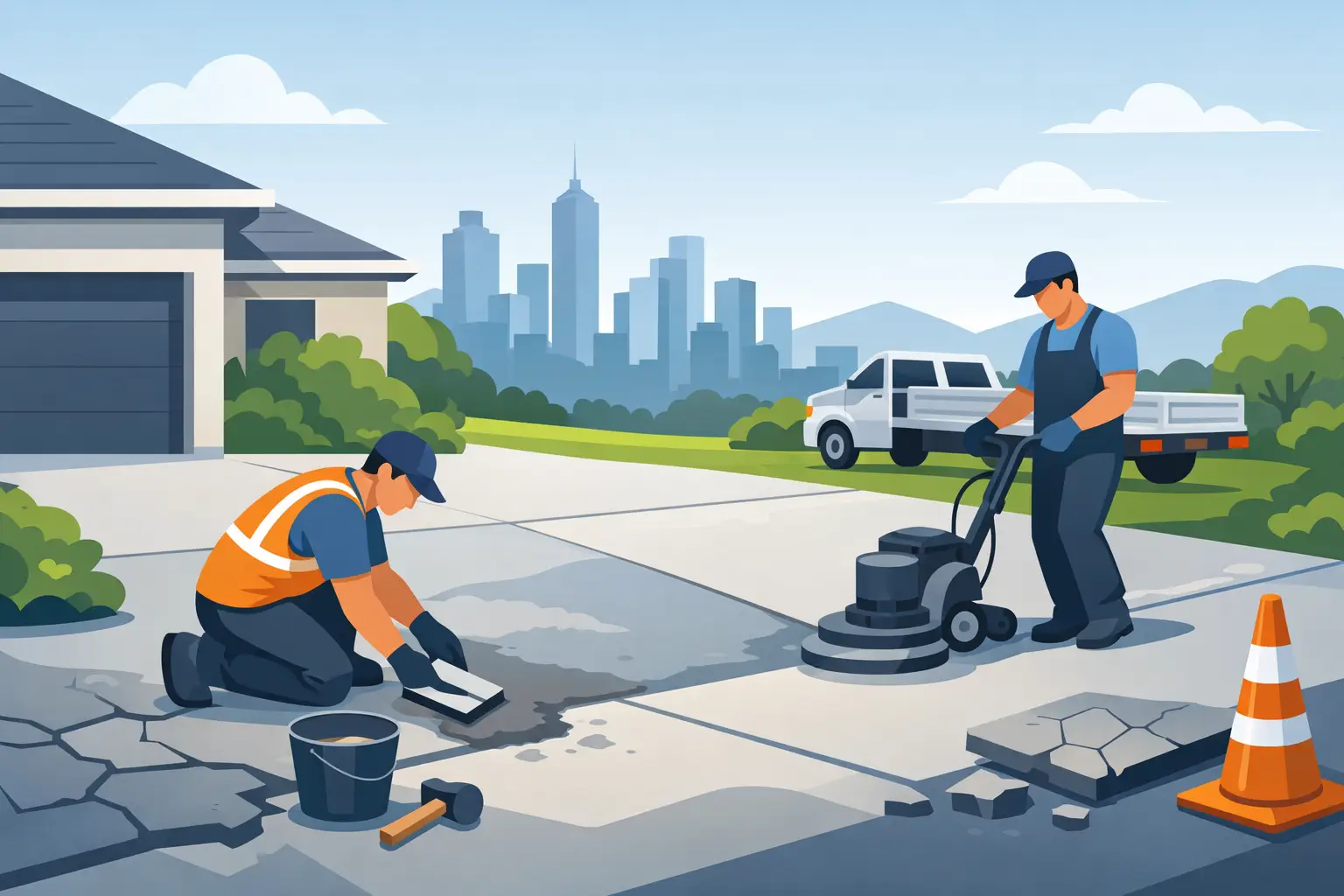
A driveway has a hard job. It carries family cars, delivery vans, bins, bikes and the occasional ute, while coping with Melbourne’s changing weather. When cracks start widening, a corner sinks, or the surface becomes rough and patchy, concrete driveway repair Melbourne property owners need is about more than improving street appeal. It is about making the entrance to your home safer, easier to use and ready for the years ahead.
For homes in Mickleham, Truganina, Wollert, Mernda and Donnybrook, driveway damage is common on both older properties and newer builds. The right repair depends on what is happening underneath the concrete, not just how the top looks. A quick patch may suit a small, stable crack. A driveway that has dropped, moved or broken into uneven sections needs a more considered solution.
What Your Driveway Damage Is Telling You
Concrete is strong, but it is not immune to movement. Most driveway problems begin with the ground preparation, drainage or pressure placed on the slab over time. If the base beneath the concrete settles, the slab can crack or sink. Water that runs underneath or sits along the edges can soften the ground and make the problem worse.
Hairline cracks are often caused by normal shrinkage as concrete cures. They can be cosmetic, particularly if they are fine, shallow and have not changed over time. Wider cracks, however, are worth inspecting. When the two sides of a crack sit at different heights, or when weeds keep growing through it, there may be movement below the surface.
A sunken section near the garage, footpath or front gate can become a trip hazard and make parking awkward. Pooled water is another warning sign. Besides being inconvenient after rain, standing water can accelerate wear, leave staining and direct moisture towards areas where it does not belong.
Surface flaking is different again. This is when the top layer breaks away and exposes a rough, worn finish. It can result from age, poor finishing, moisture issues or repeated vehicle traffic. The repair approach must match the cause, otherwise a new surface treatment may not last as it should.
Concrete Driveway Repair Melbourne: Repair or Replace?
The biggest question is usually whether a damaged driveway can be repaired or whether replacement is the better investment. There is no one answer for every property. A practical contractor should assess the slab, the base, drainage, access and how you use the driveway before recommending a path forward.
Repair is often a sensible option when the concrete is largely sound and the issue is localised. Small cracks can be cleaned, filled and sealed to reduce water entry. Minor surface damage may be improved with preparation and a suitable resurfacing treatment. If one edge has chipped from years of use, it may be possible to rebuild that section and restore a tidy line.
Replacement becomes more worthwhile when cracking is widespread, slabs have shifted significantly, or the driveway no longer drains properly. If the concrete has failed because the base was not prepared well, covering the problem will only delay another round of repairs. Removing the affected area, rebuilding the base and pouring new concrete can deliver a safer and more durable result.
It also makes sense to consider your wider plans. If you are adding a gate, new fencing, retaining walls, garden beds or a front landscaping upgrade, replacing an old driveway at the same time can create a more cohesive finish. This can avoid having separate trades return later and make the whole front yard feel planned rather than pieced together.
Signs a repair should not be put off
Some damage can wait while you budget and plan. Other issues deserve attention sooner. Arrange an assessment if your driveway has large or expanding cracks, uneven joins that catch shoes or tyres, sections that are sinking, loose concrete at the surface, or water flowing back towards the house.
These concerns do not automatically mean the entire driveway needs to come out. They do mean it is time to understand the cause. Taking action early can help prevent a smaller problem from spreading across more of the slab.
The Value of Proper Preparation
The part of a driveway you see is only one part of the job. A driveway that performs well starts with good ground preparation and a stable base. The site needs to be assessed for levels, soil conditions and water flow, especially on new blocks where surrounding works may still be taking shape.
Drainage should be planned so water moves away from the home and does not collect beside the slab. Edges need support, and the concrete needs appropriate joints to allow for controlled movement. These details may not be the exciting part of a driveway project, but they are what help protect the finished result.
This is why the cheapest-looking repair is not always the best value. Applying material over a moving or poorly supported slab may look better briefly, but it cannot fix an underlying base problem. Honest advice may sometimes involve a larger repair or replacement area. While that can cost more upfront, it can save you from repeating the work after another wet season or period of heavy use.
Making the Driveway Work With Your Outdoor Space
A repaired or renewed driveway can do more than provide a place to park. It sets the tone for the front of your property and connects practical areas such as the garage, gate, entry path and garden. A clean, level finish can lift the appearance of an established home, while a well-planned new driveway gives a new-build block a more complete and welcoming feel.
For busy families, practical access matters. You may need room for two cars, a turning area, easier bin access or a path that feels safe for children and visitors. Landlords may be looking to improve presentation and reduce maintenance. Business owners need an entry that stays safe and professional for customers, staff and deliveries.
Concrete also works well alongside landscaping features. New turf can soften hard edges, garden beds can add colour and privacy, and fencing or gates can create a more secure boundary. The key is to plan the levels and access before each element is installed. A driveway should not feel like an isolated grey strip. It should support the way you want the entire outdoor space to function.
A2Z Landscaping & Concreting Expert can coordinate driveway work with complementary landscaping and outdoor construction, helping Melbourne property owners avoid the stress of managing separate contractors for every part of the yard.
Choosing a Contractor With Care
Your driveway is a significant part of your property, so it is worth choosing a team that takes the time to look beyond the visible crack. A useful quote should be based on an inspection and a clear discussion about the condition of the concrete, the likely cause of the damage, the repair options and what preparation is required.
Ask how the area will be prepared, how water will be managed and whether nearby landscaping, fences or paths need to be considered. If replacement is recommended, find out which parts need replacing and why. Clear answers help you compare options properly instead of deciding on price alone.
It is also helpful to think about timing. Concrete work needs suitable conditions and a realistic curing period before regular vehicle use. Rushing back onto a fresh driveway can compromise the finish. A dependable local contractor will explain what to expect, keep the site organised and respect that your home needs to remain as accessible as possible while work is underway.
Looking After a Repaired Driveway
Once concrete repairs are complete, a little care goes a long way. Keep drainage paths clear of leaves and soil, particularly around edges and pits. Avoid allowing garden beds to build up higher than the driveway, as this can trap moisture against the concrete. Clean oil spills early and keep an eye on new cracks so they can be assessed before water enters them.
Be mindful of unusually heavy loads if your driveway was designed for normal residential vehicles. Repeated heavy truck traffic can damage edges and place pressure on slabs, especially near turns. If you are planning building work, speak with your contractor about access before large vehicles arrive.
A well-repaired driveway should make daily life simpler: a smoother trip from the street to the garage, fewer puddles after rain, and a front yard that feels cared for. Start with a clear assessment, choose a solution that suits the actual cause of the damage, and give your property the solid welcome it deserves.
No Responses