

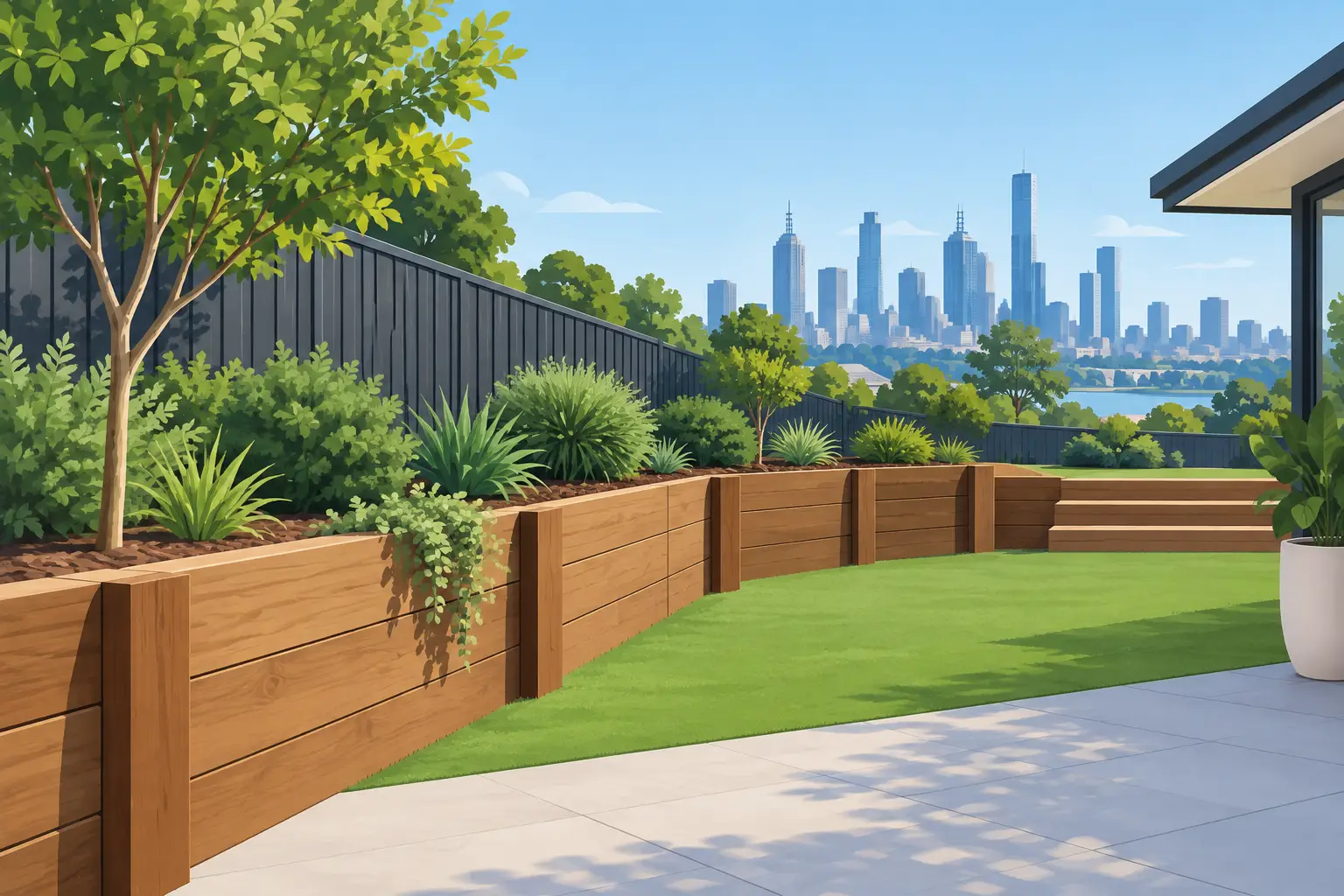
A sloping block can make a brand-new backyard feel smaller than it is. One corner is too steep for outdoor furniture, another washes out after rain, and the space that should suit a barbecue, kids and pets remains awkward to use. Timber sleeper walls can change that by holding soil securely, creating level areas and giving your landscape a neat, purposeful shape.
For homes across Mickleham, Truganina, Wollert, Mernda and Donnybrook, they are often a practical answer to the uneven ground common on new-build blocks and established properties alike. Done well, a sleeper wall is not just a boundary between two heights. It is the structure that makes a lawn, garden bed, paved area or entertaining zone possible.
What timber sleeper walls can do for your yard
A timber sleeper retaining wall holds back soil where the ground level changes. This may be along a fence line, around a raised garden, beside a driveway or across the back of a block that falls away from the house. By splitting one steep area into smaller, flatter levels, it helps turn wasted ground into space your family can actually enjoy.
That can mean a level patch of turf for children to play on, a cleaner edge around a paved patio, or room for a garden bed without soil spilling onto the lawn. On a compact block, even a modest retaining wall can make the layout feel more organised and open.
Timber has a warm, natural appearance that works especially well with lawns, planting, decking and timber fencing. It can soften the look of hard surfaces such as concrete and paving while still providing the strength needed for a well-planned retaining solution. For many homeowners, it is a sensible way to improve the yard without making it feel overly built-up.
Where timber sleeper walls work best
Timber sleeper walls are a good fit for low to medium-height changes in level, particularly when the wall will be part of a broader landscape upgrade. They are commonly used to create terraced backyards, define garden beds, support lawn areas and manage a gradual slope along a side boundary.
They can also help establish a clear transition between outdoor zones. For example, a retaining wall may hold a raised lawn above a lower paved entertaining area. With the right design, the wall can include steps, planting or integrated seating nearby, so the whole backyard feels connected rather than divided.
The best location depends on drainage, soil conditions, access and the final use of the area. A wall supporting a small garden bed has very different requirements from one retaining a large amount of soil near a fence, driveway or building. It is worth looking at the complete yard plan before construction starts, rather than treating the wall as a stand-alone job.
Plan the levels before choosing the look
It is easy to focus on sleeper colour or the style of posts first. However, the starting point should be where water flows, how high the retained ground will be and what needs to sit above and below the wall.
Consider where you want the lawn, garden, paving, deck, shed or pergola to go. A retaining wall placed in the right position can reduce future excavation and make the rest of the project simpler. A wall placed without a clear plan can leave narrow, difficult-to-maintain strips or create an awkward step between areas.
For homes with a new-build backyard, planning the retaining wall early is particularly helpful. It allows the final levels to be set before turf, garden soil, paving and fencing details are completed.
Good drainage is what protects the wall
The most important part of a sleeper wall is often the part you cannot see once the landscaping is finished. Soil becomes much heavier when saturated, and trapped water places ongoing pressure behind a retaining wall. Without proper drainage, even quality materials can deteriorate or shift sooner than they should.
A suitable drainage system directs water away from the retained soil and prevents it from building up behind the sleepers. Depending on the site, this may involve drainage aggregate, agricultural pipe and carefully managed falls. The wall also needs enough space behind it for the drainage material to do its job.
Melbourne weather can bring dry stretches followed by heavy rain, so drainage is not an optional extra. It is a core part of building a wall that stays straight, tidy and reliable over time. Surface water from roofs, paving and neighbouring areas should also be considered, especially on tighter suburban blocks.
Choosing the right timber and construction method
Most outdoor sleeper walls use treated pine or hardwood sleepers. Treated pine is widely used because it is cost-effective, readily available and suits many residential projects. Hardwood offers a denser, more natural timber look, although it can come at a higher cost and may vary in appearance.
The right option depends on the wall height, the style of the property, budget and maintenance expectations. Whichever timber is selected, it should be suitable for ground-contact use and installed with compatible posts and fixings. The posts carry much of the load, so their depth, spacing and secure installation matter just as much as the sleepers themselves.
For taller walls, complex slopes or walls close to structures, professional assessment is essential. There may be council, engineering or building requirements depending on the height, position and site conditions. These details are not there to complicate the project. They help ensure the finished wall is safe and suited to the job it needs to do.
Allow for timber to weather naturally
Timber is a natural material, and it will change in colour as it sits in the sun and rain. Many homeowners like the softer, weathered finish that develops over time. Others prefer to apply a suitable protective coating to maintain a particular look.
Small surface checks and movement can occur with timber as conditions change. This is normal to a degree, but poor drainage, undersized posts or inadequate footing depth are different issues entirely. A well-built wall accounts for the way timber behaves outdoors while providing the structural support the site demands.
Make the retaining wall part of the landscape
The most successful sleeper walls do more than hold earth. They help create a backyard with a clear purpose. A simple wall can become the edge of a lush raised garden, a backdrop for feature planting or a clean border that gives fresh turf a polished finish.
Planting is particularly effective around timber because foliage softens the straight lines and brings colour through the seasons. Low-growing plants can trail near the edge, while shrubs and small trees can add privacy where there is enough room. Keep the planting plan realistic, though. A garden that looks great on day one should still be easy to access, mulch and maintain a year later.
Timber can also work beautifully beside concrete paths, paving or a deck. The contrast between natural grain and clean hardscape lines gives a yard warmth without losing the practical benefits of durable outdoor surfaces. When one team coordinates the retaining, turf, paving and planting, the finished levels and transitions are usually far more cohesive.
Signs your yard may need a retaining solution
If soil keeps moving after rain, the lawn slopes sharply towards a fence, or you have an unusable patch of ground beside the house, a sleeper wall may be worth considering. Other common signs include garden edging that will not stay in place, exposed soil on a bank, pooling water and a backyard that feels like it has no level area for entertaining.
A site visit is the best way to work out whether timber is the right material and where the wall should sit. Sometimes a low sleeper wall is all that is needed. In other cases, the better outcome may involve drainage work, terracing, concrete edging or another retaining option designed for the height and pressure involved.
A2Z Landscaping & Concreting Expert can help turn an uneven or underused yard into a practical outdoor space, from the first discussion through to the finished landscape. A clear plan, quality materials and careful construction give you more than a wall – they give your property the level ground it needs for the life you want to enjoy outdoors. Request a free, no-obligation quote and start shaping a backyard that feels like part of your home, not a problem waiting for the next rainy day.
No Responses